What HR and L&D Leaders Should Prepare for in the Second Half of 2026
by Mentoring Matters
4 minutes read
The halfway point of any year is a useful moment to pause, take
stock, and recalibrate. For HR and Learning & Development
leaders, the second half of 2026 is shaping up to be anything
but routine. The forces that were already putting pressure on
organisations at the start of the year, AI disruption, economic
uncertainty, talent volatility, and the accelerating pace of
change are not letting up. If anything, they are compounding.
What is becoming increasingly clear is that many organisations
are running a quiet but costly deficit: the gap between the pace
of organisational change and the actual capacity of their leaders
to navigate it.
For HR and L&D leaders, the question is no longer whether
to act. It is how and how quickly.
Here is what we believe will define the second half of 2026, and
why embedding coaching inside your leadership development
architecture, not alongside it, will be the difference that matters.
1. Ambiguity Is Now the Operating Environment
Are your leaders equipped to lead, not just cope when the path isn't clear?
Leaders have been told for years to "get comfortable with ambiguity."
That framing no longer holds. Ambiguity is not a phase. It is the condition.
In 2026, leaders are making high-stakes calls with incomplete
information, under pressure, at pace. The Leadership Challenge's
survey of 1,500 HR professionals found that 66% expected even more
change this year than last.
What organisations need are leaders who can read the situation,
stay grounded, and make clear calls even when the path is not fully
visible. That kind of leadership is not developed through workshops
alone. It requires deep, personalised work, the kind that coaching
makes possible.
At Mentoring Matters, we work with senior leaders on exactly this:
not removing ambiguity, but building the self-awareness, emotional
regulation, and decision-making agility to navigate it with confidence.
Our coaches are not trainers. They are senior corporate leaders turned
credentialed coaches, and they know what it feels like to be in the
rooms our participants sit in.
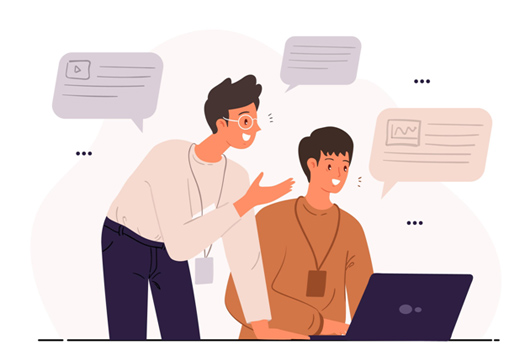
2. Leadership Pipelines Are Leaking, and the Pressure Is Upstream
When did your most senior leaders last have a dedicated
space to develop and not just perform?
The leaders carrying the most weight are often the ones in the
least structured development. VPs, Senior Directors, CXOs are
expected to drive strategy, build culture, model resilience, and
manage teams simultaneously often without a single dedicated
space for their own growth.
This is precisely where executive coaching delivers its most
measurable return. Coached leaders are more likely to receive
high performance ratings and significantly less likely to leave
the organisation compared to their non-coached peers.
For HR and L&D leaders deciding where to direct investment
in H2 2026, the answer is not just programmes for new managers.
It is sustained coaching journeys for the senior leaders already
carrying the weight, embedded into your annual leadership
development calendar, not bolted on as a one-off.
3. Alignment Is Harder When Everyone Is Stretched
Is your leadership team truly aligned, or just agreeable
in meetings?
Individual leaders can be high-performing while the leadership
team is functionally fragmented. Under pressure, each leader
optimises for their own function. Priorities diverge. Trust erodes
slowly. By the time it shows up in business outcomes, the drift
has been happening for months.
Team coaching addresses this at the system level: surfacing
dynamics, building shared accountability, and aligning the group
around what matters. It is still underused in most organisations,
and one of the highest-leverage interventions available to HR
leaders right now.
At Mentoring Matters, our work with senior leadership teams in
growth-phase organisations has shown us just how powerful this
intervention can be, particularly when paired with individual
1-1 coaching that addresses each leader's personal development
needs alongside the collective work.
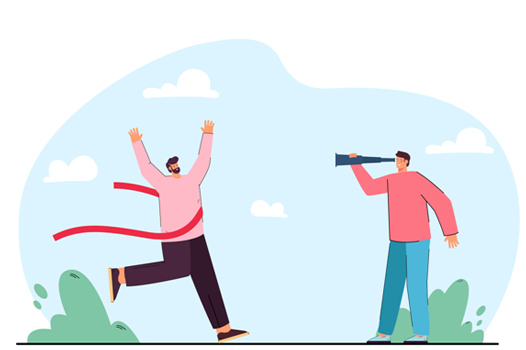
4. The New Manager Problem Is Reaching a Tipping Point
Are your new managers equipped for the complexity they
face, or just the complexity you planned for?
Today's new managers are expected to coach their teams, navigate
hybrid work dynamics, deliver performance conversations, manage
conflict, and drive engagement, all while learning the job itself.
Leadership development research consistently highlights that the
shift from individual contributor to people leader remains one of
the most poorly supported transitions in most organisations.
As Gallup's 2025 research found, ineffective leadership is at the
root of many of the organisational challenges HR leaders are trying
to solve and only 47% of employees strongly agree that they know
what is expected of them at work.
Structured coaching programmes for new managers, combining group
coaching with skills development and peer learning have consistently
demonstrated measurable impact. In our work with clients running
large cohorts of new managers, we have seen managers build genuine
coaching capability, improve team engagement, and develop the
confidence to have the conversations that matter.
5. Women in Leadership Journeys Need to Move Beyond One-Off Workshops
Is your women's leadership programme changing behaviour,
or just filling a calendar?
Despite years of intent, many organisations still struggle to
meaningfully advance women into senior leadership roles. The
programmes exist, the impact often does not.
HR leaders have an opportunity to shift from episodic interventions
(a half-day workshop here, a speaker series there) to something more
intentional. Blended learning journeys that combine skill-building
workshops with sustained coaching support.
The difference is significant. Workshops build awareness. Coaching
builds capability and more importantly, it helps women leaders work
through the very real internal and external blockers that hold them
back: the reluctance to claim achievement, the disease to please,
the perfection trap, the challenge of building strategic networks
rather than just collegial ones.
So What Should HR and L&D Leaders Do Now?
The second half of 2026 will reward organisations that treat
leadership development as a strategic lever, not a line item
to be managed.
The leaders in your organisation are not short of information,
frameworks, or good intentions. What they often lack is the time
and space to develop the inner capabilities that will make a
difference, the ability to stay steady under pressure, to build
trust while driving performance, to lead others through change
while managing their own uncertainty.
That is what coaching does. And in the second half of 2026,
it may be the most important investment your organisation makes.
Mentoring Matters is a pure-play leadership coaching firm with
over 10 years of enterprise delivery experience. We run structured
1:1 and group coaching programmes for large cohorts of leaders
across IT/ITES, BFSI, Healthcare, Manufacturing, and Financial
Services. Our coaches bring lived senior leadership experience
alongside professional coaching credentials.
To explore how coaching can support your leadership agenda, visit
www.mentoring-matters.com
.
SEO Keywords:
-
Executive coaching for senior leadership teams
-
Hr leadership development priorities
-
Team alignment coaching for executive teams
-
Leadership coaching programs for mid-level managers
-
L&D strategy for leadership development
-
Previous article:
-
Next article: